Young Stars' Winds Accelerate Planet Formation in Protoplanetary Disks
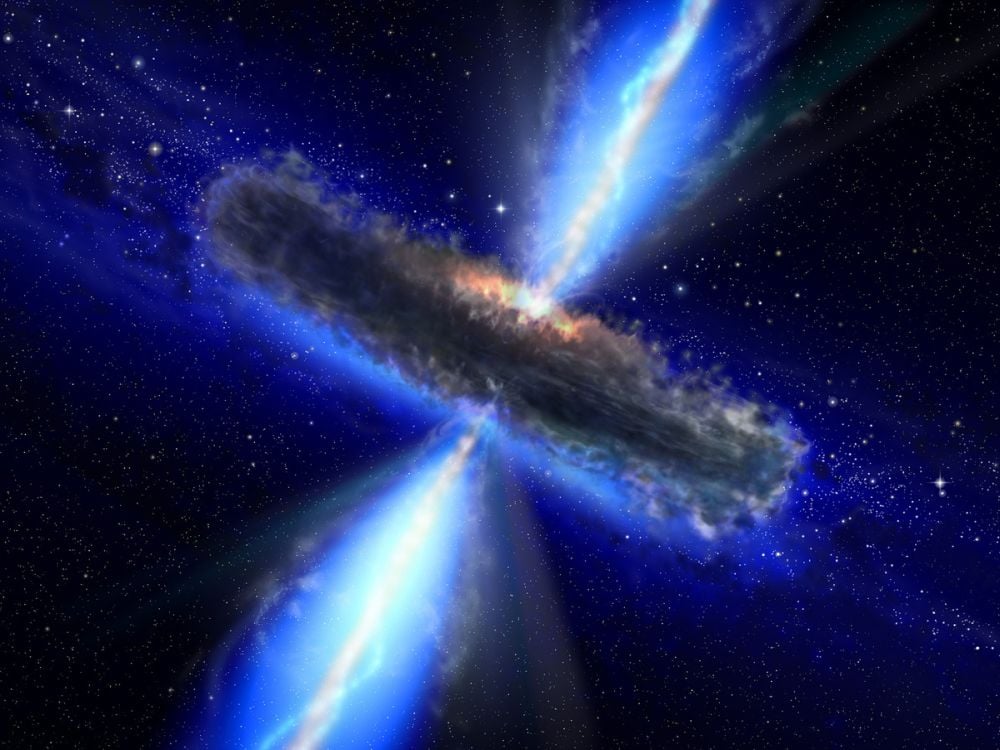
Planets forming around young stars face a race against time as protoplanetary disks—reservoirs of gas and dust—dissipate rapidly due to stellar winds and radiation. This process, which can strip the disk within a few million years, particularly affects the formation of gas giants, which must accrue their mass before the disk vanishes.
Research by Kimura et al. (2016) indicates that the average lifetime of these disks is approximately 3.7 million years, with dispersal typically occurring within 2 to 4 million years. Factors such as stellar mass and environmental radiation influence these timescales, with more massive stars and high-radiation environments accelerating the process.
According to Baldovin-Saavedra et al. (2016), over 80% of protoplanetary disks are present in clusters at around 1 million years, but this number drops to about 50% by 2 to 3 million years, and below 5% by 10 million years. This rapid dissipation underscores the urgency for gas giants to form within this timeframe.
Further studies, including simulations by Manara et al. and Komaki et al. (2023), highlight that disk dispersal times can vary significantly, ranging from 10 million years for low-mass stars to as brief as 2 million years for stars around 7 solar masses. The combination of magnetohydrodynamic (MHD) winds and photoevaporation drives this process.
The necessity for rapid planet formation is particularly pronounced in dense star-forming regions where external photoevaporation can strip gas from disks in less than 1 million years, according to a review by PMC. This scenario demands that gas giants form either very quickly or in environments with lower radiation exposure.