Voyager 1 Reaches One Light-Day from Earth
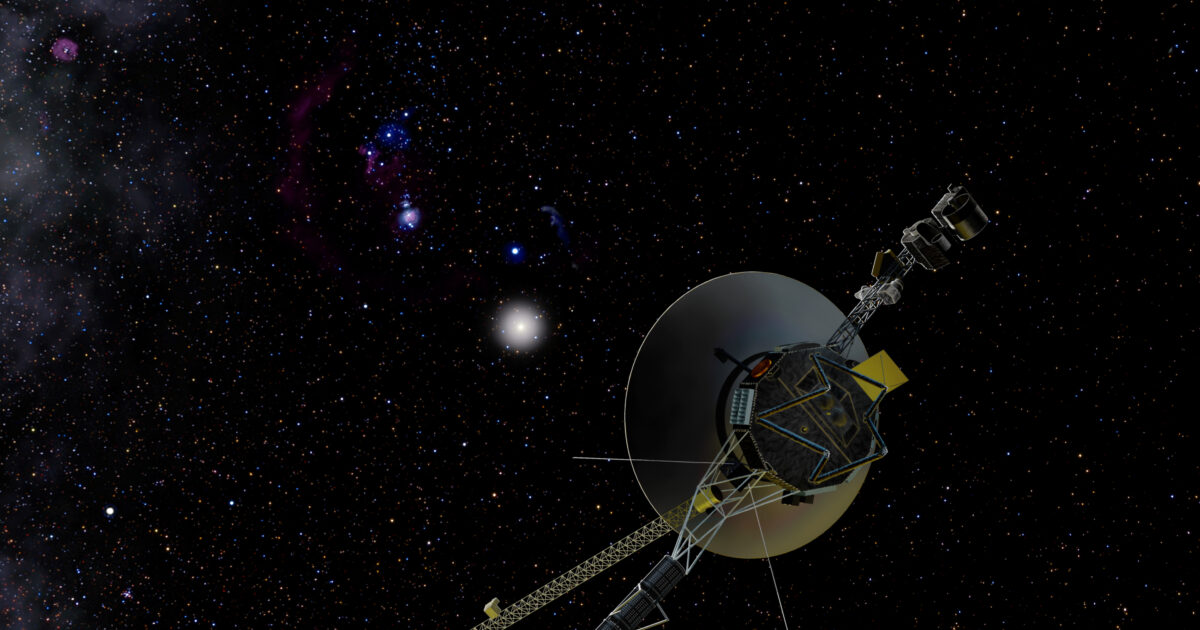
On November 18, 2026, at approximately 5:16 a.m. EST, NASA's Voyager 1 spacecraft became the first human-made object to reach a distance of one light-day from Earth, a milestone equivalent to approximately 16.1 billion miles (25.9 billion kilometers). This achievement comes after more than 49 years of travel since its launch in 1977.
Voyager 1's journey to this point was confirmed through carrier-signal and trajectory analysis. The spacecraft is now located roughly 173.25 astronomical units from Earth, with a one-way signal time of just over 24 hours. It continues to travel at a speed of about 38,000 mph (61,155 kph) while exploring interstellar space, having crossed the heliosphere in 2012.
In an interview with the Planetary Society, Linda Spilker, Voyager project scientist, described the milestone as “a feat of human engineering and the work of an entire generation.” She highlighted the challenges faced during the mission, including moments when the spacecraft temporarily ceased sending full data. Spilker also emphasized the critical role of NASA's Deep Space Network, particularly the Canberra station, which is currently the only facility capable of sending commands to both Voyager probes.
As Voyager 1 approaches its 50th anniversary, plans are underway to celebrate the mission's achievements, including organizing a science symposium.