Vera C. Rubin Observatory Launches 10-Year Cosmic Survey
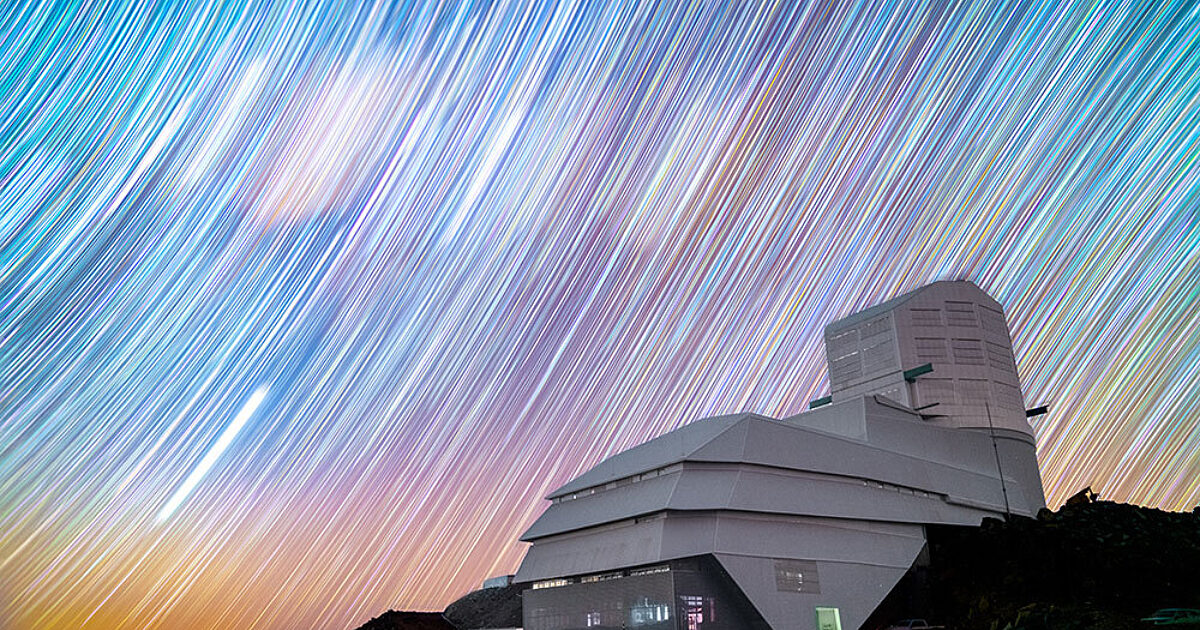
The Vera C. Rubin Observatory, located in Chile, has officially launched its 10-year Legacy Survey of Space and Time (LSST), a project aimed at creating the most detailed time-lapse of the southern night sky. The survey commenced in late June 2026.
The LSST is designed to explore four major scientific areas: the nature of dark matter and dark energy, the inventory of Solar System objects, the structure and evolution of the Milky Way, and transient and variable phenomena. The observatory features an 8.4-meter Simonyi Survey Telescope equipped with a 3.2-gigapixel camera, the largest of its kind.
This ambitious project will cover approximately 18,000 square degrees of the southern sky, revisiting each field about 800 times over the decade. The observatory is set to collect data every three nights, resulting in a dynamic 'cosmic movie' of the evolving sky.
The Rubin Observatory is expected to generate around 10 terabytes of data each night and issue up to 7 million alerts for transient events, moving objects, and variable sources. By the end of the survey, the dataset will include billions of objects and trillions of measurements, with a total data volume reaching approximately 60 petabytes.
Brian Stone, acting director of the National Science Foundation, remarked at the survey's launch, "Today, we begin filming the greatest cosmic movie ever made." The project is anticipated to significantly advance modern cosmology and astrophysics.