Venezuelan Earthquakes Leave Thousands Struggling Amid Rescue Efforts
By David Okafor
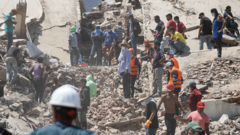
In the aftermath of twin earthquakes that struck northern Venezuela on June 24, local residents and emergency responders are struggling to rescue survivors amidst widespread devastation. The earthquakes, measuring 7.2 and 7.5 in magnitude, caused hundreds of buildings to collapse in areas such as La Guaira and greater Caracas.
According to official figures, the death toll has reached 920, with approximately 3,360 people injured and over 50,000 reported missing. The United Nations estimates that 6.76 million people have been affected, including about two million in Caracas.
Rescue operations have been severely hindered by a lack of equipment. In the critical first 48 hours, there was a shortage of cranes, hydraulic shovels, and other essential tools, forcing firefighters and volunteers to resort to using their hands to pull victims from the rubble.
International assistance has begun to arrive, with over 1,600 rescue personnel and 100 rescue dogs deployed across more than 35 urban search and rescue teams. Countries from Latin America, Asia, Europe, and the United States have offered aid, with the U.S. committing $150 million in humanitarian assistance and proposing partial sanction relief.
Venezuela's vulnerability to earthquakes is underscored by the fact that 80 percent of its population lives above the most active fault lines. The national seismic monitoring agency, FUNVISIS, has confirmed the earthquake data and is analyzing the seismic activity to understand the potential overlap or amplification of seismic waves.