U.S. Nuclear Detector GRETA Begins Operation at Michigan Facility
By Priya Anand
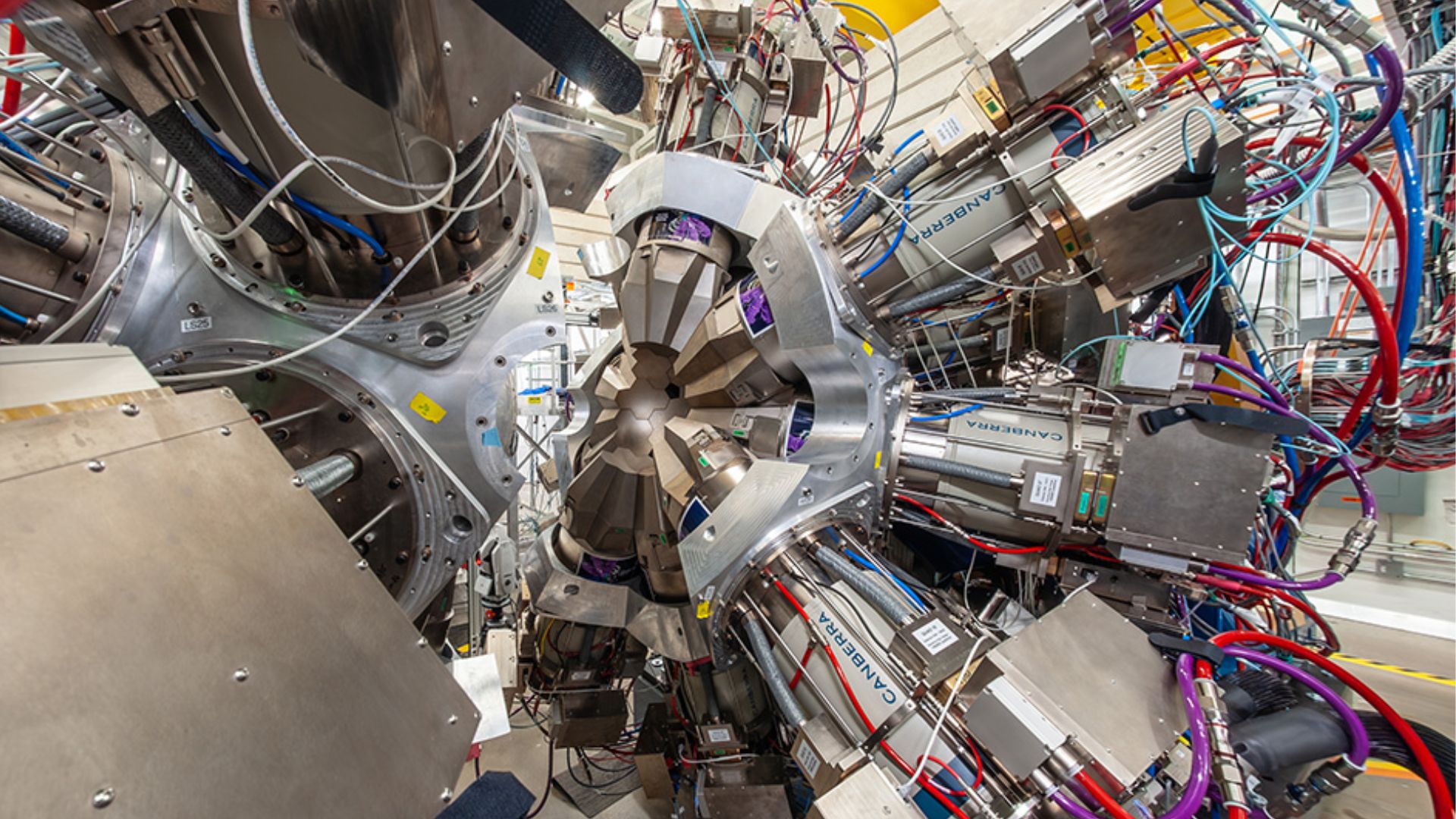
The Gamma-Ray Energy Tracking Array (GRETA), a state-of-the-art nuclear detection system, has officially begun operations at the Facility for Rare Isotope Beams (FRIB) at Michigan State University. This development, announced by Lawrence Berkeley National Laboratory on July 28, 2026, represents a major step forward in both national security and nuclear science research.
GRETA employs high-purity germanium detectors arranged in a full-sphere configuration, providing unprecedented sensitivity and precision in observing nuclear gamma rays. This setup allows researchers to gain deeper insights into nuclear structures.
Developed under the leadership of Berkeley Lab, with contributions from Argonne and Oak Ridge national laboratories, GRETA was assembled at Berkeley Lab and transported to FRIB in the fall of 2025. The commissioning process involved integrating GRETA with FRIB’s ReAccelerator beamline and conducting a successful characterization run.
Project director Paul Fallon highlighted the exceptional quality of the data collected, noting that GRETA's sensitivity significantly surpasses previous arrays. The system is expected to be 10 to 100 times more sensitive than its predecessors, according to prior projections from Berkeley Lab.