Timber Skyscrapers Offer a Sustainable Urban Future
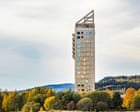
Engineered wood, particularly cross-laminated timber (CLT) and glulam, is gaining traction as a sustainable alternative to traditional concrete and steel in high-rise construction. This shift aligns with global sustainability goals, offering significant reductions in greenhouse gas emissions.
Studies have shown that timber buildings can deliver 34-84% lower climate-change impacts compared to reinforced-concrete structures, depending on the building's height and the methodology used. For instance, a life-cycle analysis of a mid-rise CLT residential building in Melbourne revealed a 30% reduction in greenhouse gas emissions compared to similar concrete structures.
Further analysis of a mass timber mid-rise office building indicated an 80-99% reduction in embodied carbon emissions compared to steel framing. This reduction translates to a decrease from approximately 3999 tons of CO₂-equivalent for steel to 50-795 tons for timber, contingent on end-of-life treatment.
Hybrid timber-concrete structures also demonstrate substantial emission reductions. A study on a 40-storey hybrid tower showed a more than 34% decrease in embodied greenhouse gas emissions when CLT was used extensively.
In the U.S. Pacific Northwest, a high-rise mass timber building showed a 12% lower lifecycle emissions compared to a concrete equivalent, even after accounting for end-of-life recycling offsets. However, the total life-cycle cost of timber buildings remains about 9.6% higher, primarily due to upfront material and construction expenses.
Scaling mass timber in mid- to high-rise buildings across the U.S. could yield carbon benefits equivalent to 20% of the current annual carbon storage of harvested wood products, according to projections for 2020-2070.