Study Suggests Europa's Ocean Harder to Access Than Expected
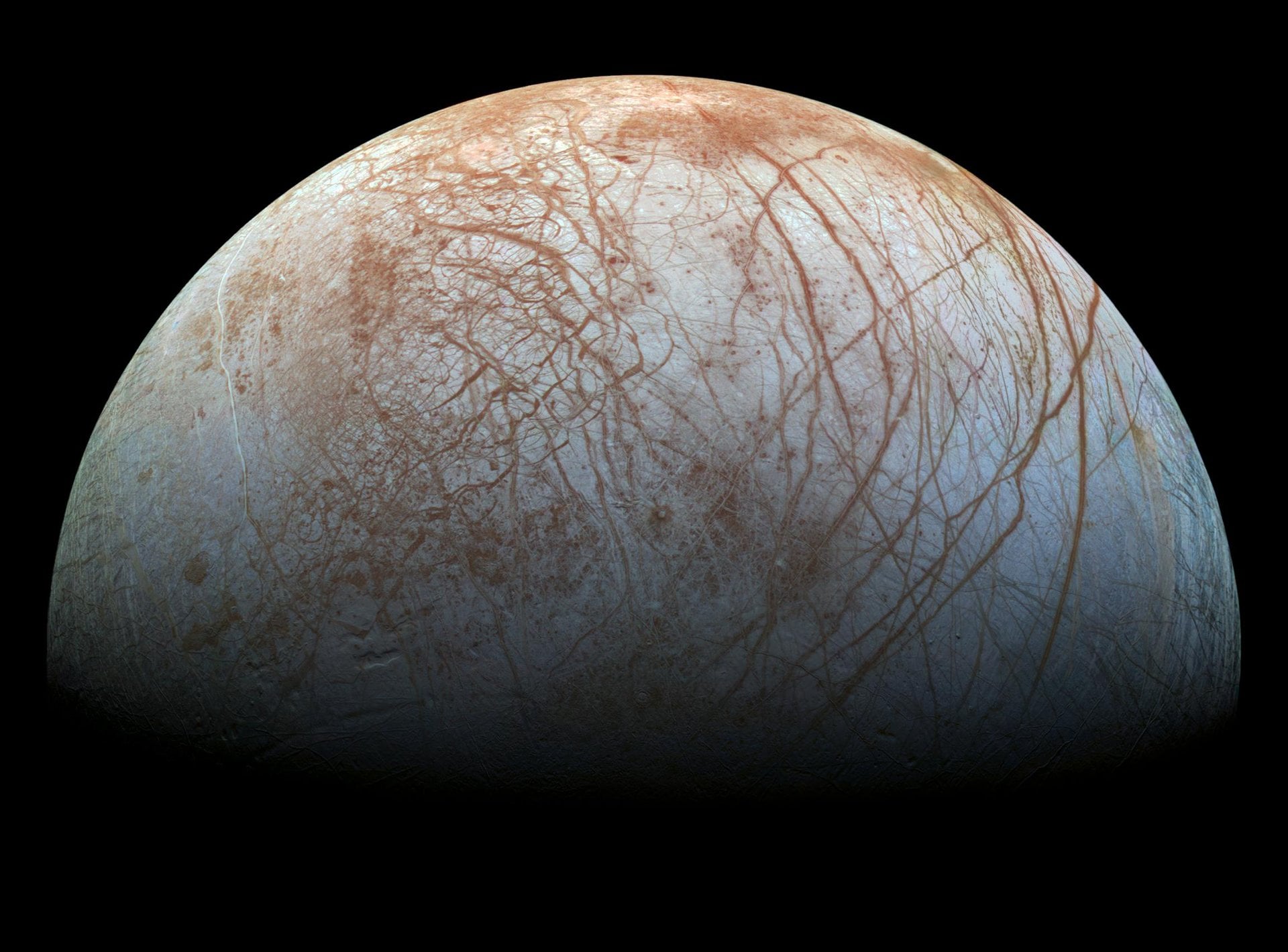
New research led by planetary scientist Lujendra Ojha indicates that Europa's icy shell may present a more formidable barrier to its hidden ocean than previously believed. This finding could significantly affect the strategies of upcoming missions to the Jovian moon.
The study, published in Nature Astronomy on July 23, 2026, utilized computer simulations to examine whether liquid water from Europa's ocean could rise through fractures in the ice shell to form shallow reservoirs. The results suggest that turbulent flow in these fractures causes the water to cool rapidly, forming frazil ice that clogs the pathways. Narrow fractures could freeze shut within hours, while wider ones are unlikely to sustain flow long enough to transport significant amounts of water.
Ojha's research implies that shallow liquid reservoirs detected by missions such as NASA's Europa Clipper might not be connected to the deep ocean but could instead result from localized melting within the ice shell. This challenges previous assumptions about the moon's subsurface water dynamics and its potential habitability.
The study's timing is crucial as NASA's Europa Clipper and the European Space Agency's JUICE missions are set to explore the Jovian system in the coming years, with arrivals expected around 2030 and 2031, respectively. Understanding the dynamics of Europa's ice shell is vital for interpreting mission data and planning future exploration.
NASA's Juno mission has also contributed to this understanding, measuring Europa's ice shell thickness at an average of 18 miles, reinforcing the notion of a substantial barrier to upward fluid movement.