Sphingomonas Desiccabilis Shows Potential in Space Bioleaching
By Priya Anand
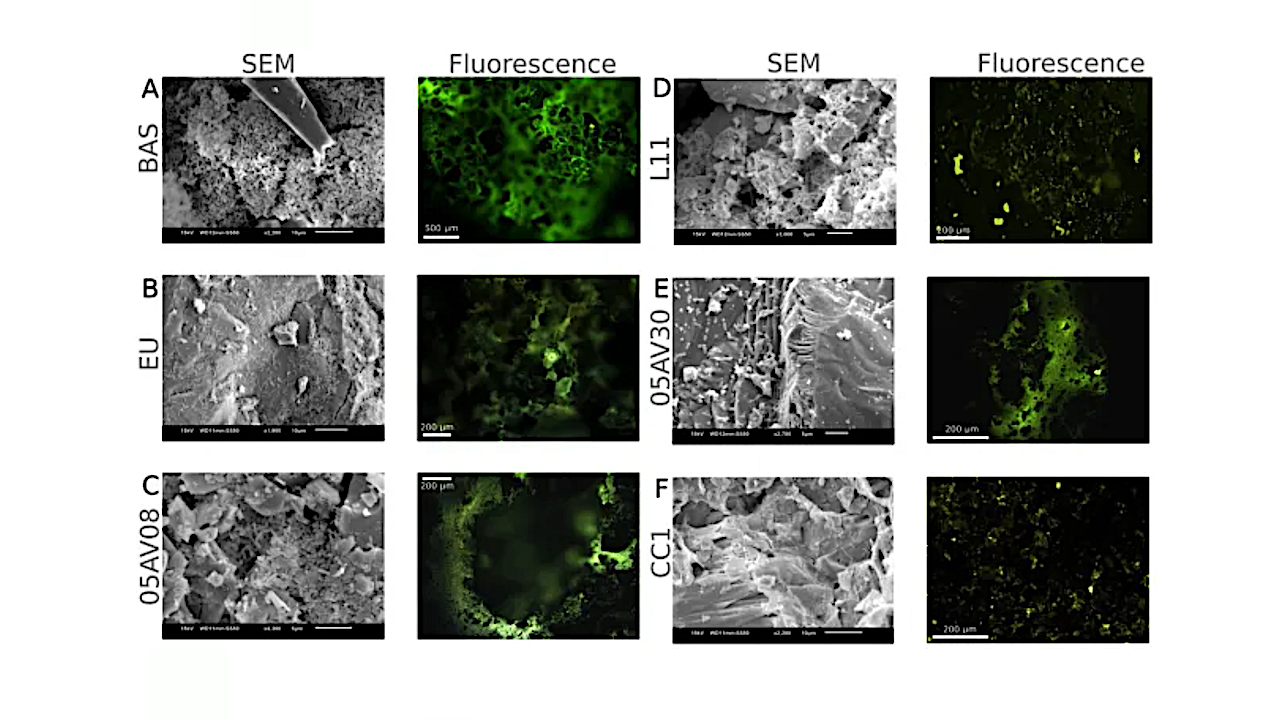
A recent study published in Frontiers in Microbiology on April 10, 2026, has demonstrated the potential of the bacterium Sphingomonas desiccabilis to selectively extract critical trace metals from various substrates, including terrestrial mine samples and extraterrestrial meteorites. This research is significant for sustainable resource utilization in space exploration.
The study involved bioleaching experiments under circum-neutral pH and static incubation conditions over 30 days at 25°C. The bacterium was tested on seven different substrates, including basalt and a meteorite from asteroid 4 Vesta. It showed the ability to mobilize metals such as cerium (Ce), thorium (Th), molybdenum (Mo), palladium (Pd), platinum (Pt), and tungsten (W).
Results indicated that extraction rates varied significantly depending on the substrate. For instance, in sample 05AV08, cerium extraction reached up to 17.21%, while thorium and tungsten extraction were 1.15% and 0.444%, respectively. In basalt, palladium and platinum extraction were approximately 0.62% and 0.0798%, respectively.
Biotic/abiotic ratios highlighted the microbial effect, with iron mobilization from basalt showing an 83.6-fold increase over abiotic controls, and similar enhancements observed for other metals. The study found that bioleaching efficiency is more influenced by the substrate's mineralogy rather than the elemental abundance.