NASA's TESS Identifies Two Ultra-Light 'Super-Puff' Exoplanets
By Rachel Kim
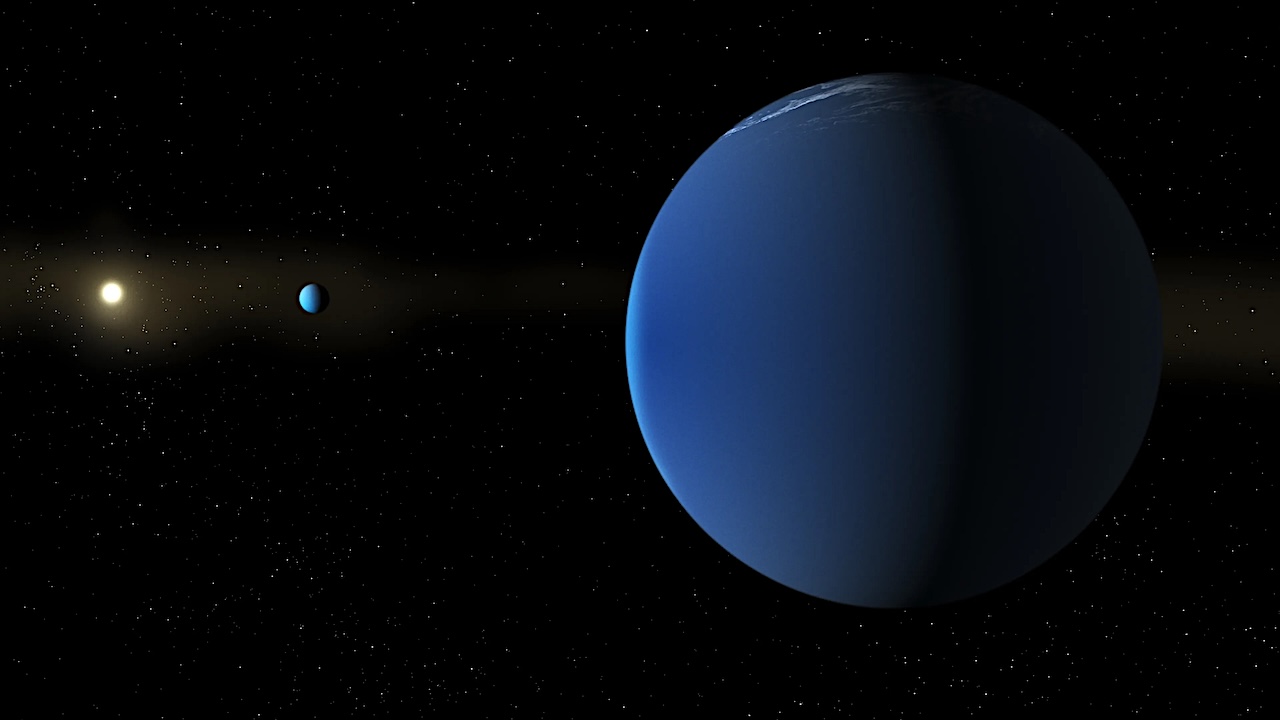
NASA's Transiting Exoplanet Survey Satellite (TESS) has identified two new exoplanets, TOI-791 b and TOI-791 c, characterized by their extremely low densities. These 'super-puff' planets, announced on June 26, 2026, are roughly the size of Jupiter but have densities akin to cotton candy, making them the lightest gas giants ever discovered.
The planets orbit a Sun-like star, TOI-791, located approximately 1,113 light-years from Earth in the southern constellation Volans. Their densities are significantly lower than Jupiter's, with TOI-791 b and c being 35 and 28 times less dense, respectively.
Both planets are engaged in a rare 5:3 mean-motion resonance, where the inner planet, TOI-791 b, completes five orbits for every three orbits of TOI-791 c. Their transits are notably long, each lasting about 11 hours.
Astronomers highlight the rarity of finding such low-density planets in the same system, which presents a unique opportunity to study the formation and evolution of super-puff planets. These findings challenge current models of planetary formation, offering a new laboratory for scientific exploration.