NASA's Bennu Samples Offer Insight into Earth's Ancient Building Blocks
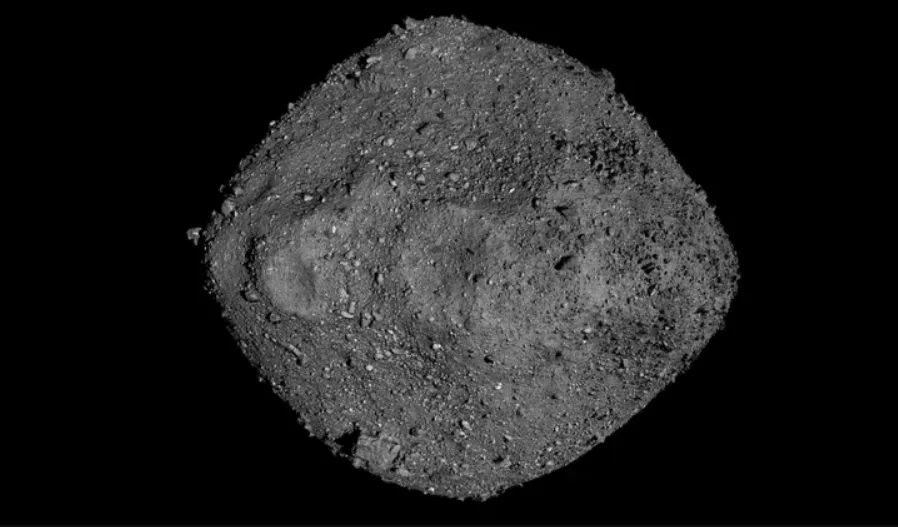
NASA's OSIRIS-REx mission has delivered samples from asteroid Bennu, revealing materials that offer a glimpse into the early Solar System's composition. The samples, collected in October 2020 and returned to Earth in September 2023, contain isotopic and mineralogical evidence of Bennu's formation at the boundary between the hot and cold regions of the protoplanetary disk.
Isotopic analyses indicate that Bennu's material includes a mix of inner-solar-system refractory inclusions and outer-solar-system ices and organics. This suggests that Bennu's parent body formed from a heterogeneous mixture, with materials transported from hot inner regions to cold outer zones.
The samples also contain anhydrous minerals such as olivine and pyroxene, which predate Bennu's parent-body accretion. Their oxygen isotope compositions point to origins from primordial reservoirs distinct from most chondrites.
Additionally, the presence of salt minerals and organic molecules, including amino acids and nucleobases, suggests that Bennu's parent body once harbored a briny, water-rich environment. These findings support theories that asteroids like Bennu carried ingredients essential to life, potentially contributing to the formation of Earth-like planets.