NASA AI Predicts Solar Storms 12 Hours in Advance
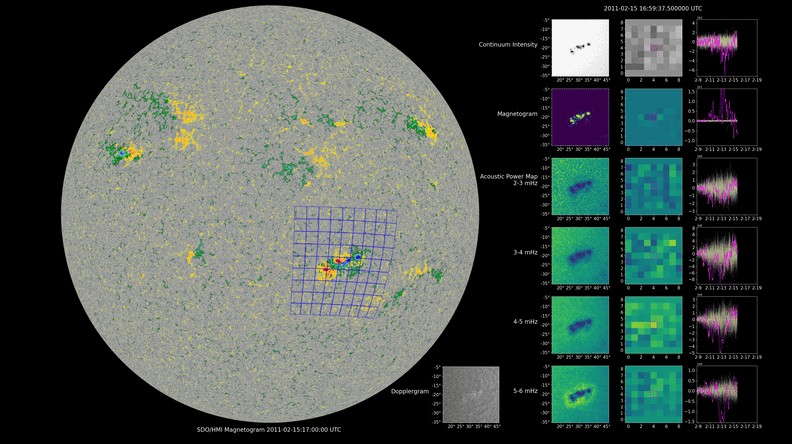
A team within NASA's COFFIES DRIVE Science Center has developed a machine-learning model capable of predicting solar active regions, which can cause severe space weather, up to 12 hours before they appear on the Sun's surface. This advancement could significantly enhance space weather preparedness.
The model utilizes data from NASA's Solar Dynamics Observatory and operates on NASA Ames' supercomputing infrastructure. It employs a sliding-window transformer architecture, detecting subtle temporal patterns such as reductions in acoustic power and rising magnetic field fluctuations that precede active region emergence.
Unlike traditional forecasts that rely on visible active regions, this model provides advance detection capability, potentially offering location-based early warnings. The initial results, published in the Journal of Geophysical Research: Machine Learning and Computation, include successful demonstrations tracking known events like the emergence of AR11158 in February 2011.
While promising, the system is not yet operational. Further validation across additional solar events is planned to refine its reliability before potential integration into real-time space weather monitoring systems. If operationalized, this capability could enhance missions such as NASA's Artemis lunar operations, improving protection for satellites, astronauts, and Earth-based infrastructure.