Mount Etna's Dual Eruptions Follow Different Magma Paths
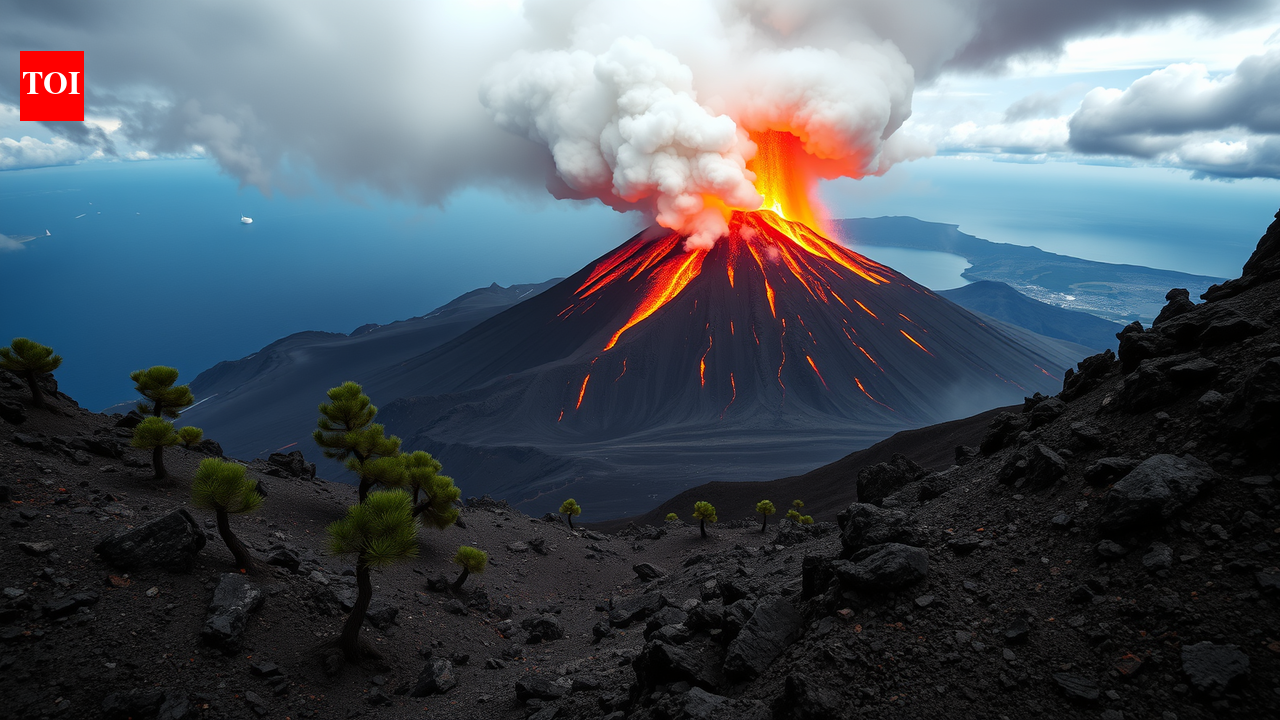
Mount Etna, one of the world's most studied volcanoes, recently erupted twice, with each event following a distinct subterranean path. This finding, reported by The Times of India, emphasizes the complex dynamics of the volcano's internal structure.
Research by Acocella et al. (2005) in the Journal of Volcanology and Geothermal Research demonstrated that the 2001 eruption was driven by a north-south eccentric dike, while the 2002–2003 eruption resulted from a major flank slip on the east-southeast side of the volcano. These events were characterized by different magma accumulation and ascent dynamics.
Further studies, such as Bonaccorso et al. (2011), highlighted that magma stored at intermediate depths of 2–6 km below sea level caused inflation and facilitated the movement of Etna's eastern flank. This was corroborated by modern mapping efforts, which identified two partially overlapping magmatic reservoirs under the summit, as detailed in a 2024 study in Communications Earth & Environment.
These findings provide critical insights into the behavior of Mount Etna, contributing to a better understanding of volcanic processes and potential future eruption patterns.