Microbial Survival on Moon's South Pole Raises Contamination Concerns
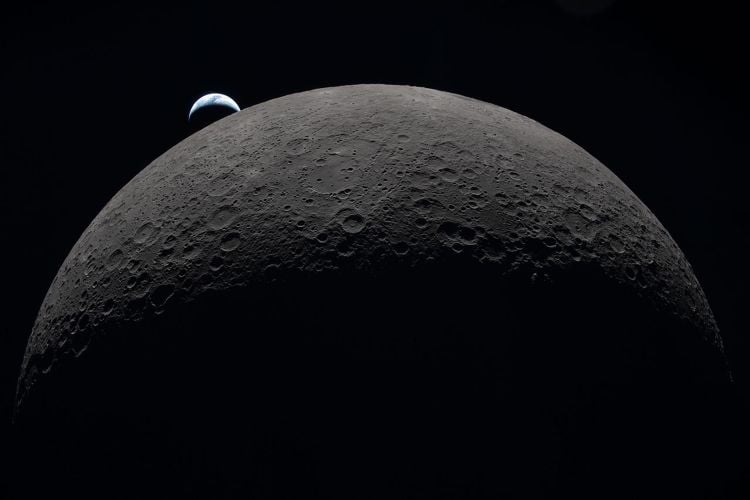
A recent study published in Science Advances indicates that microbes from Earth might survive in the shaded regions near the Moon's south pole, raising concerns about forward contamination during future crewed lunar missions. The research, led by Prabal Saxena at NASA Goddard, highlights the potential for these microbes to remain alive for at least one Earth day in niches such as crater floors or astronaut footprints.
The study utilized simulations combining lunar topography, temperature, and UV/radiation data from the Lunar Reconnaissance Orbiter (LRO) to identify survivable niches, which range from miles-wide areas to boot-print-sized locations. Microorganisms such as Aspergillus niger, Bacillus subtilis, Staphylococcus aureus, Deinococcus radiodurans, and various Fusarium species were studied, with A. niger showing the highest UV resistance.
Prabal Saxena noted, "Humans are natural explorers, and with them come ... their microbes," emphasizing the importance of understanding microbial presence before human missions. Co-author Andrew Needham stressed the need to distinguish between pre-existing lunar conditions and contamination from Earth to ensure accurate life-detection efforts on the Moon and Mars.
A joint summary by NASA and the University of Maryland, dated August 18, 2026, corroborates these findings, suggesting that microbes could survive for up to a week in shaded lunar niches. Stefano Bertone from the University of Maryland highlighted the diversity in survivability maps, noting that while microbial growth is unlikely due to the lack of liquid water, survival alone is significant for contamination control.
Historical data supports the resilience of microbes in space. A 2004 NASA-GSFC study demonstrated that spore-forming bacteria could survive for years if shielded from UV radiation. This is exemplified by the case of Streptococcus mitis, reportedly recovered alive from the Surveyor 3 camera after 31 months on the Moon, though this finding remains debated due to potential laboratory contamination.