Mars Captured in Historic and Recent Portraits by Viking 1 and Psyche
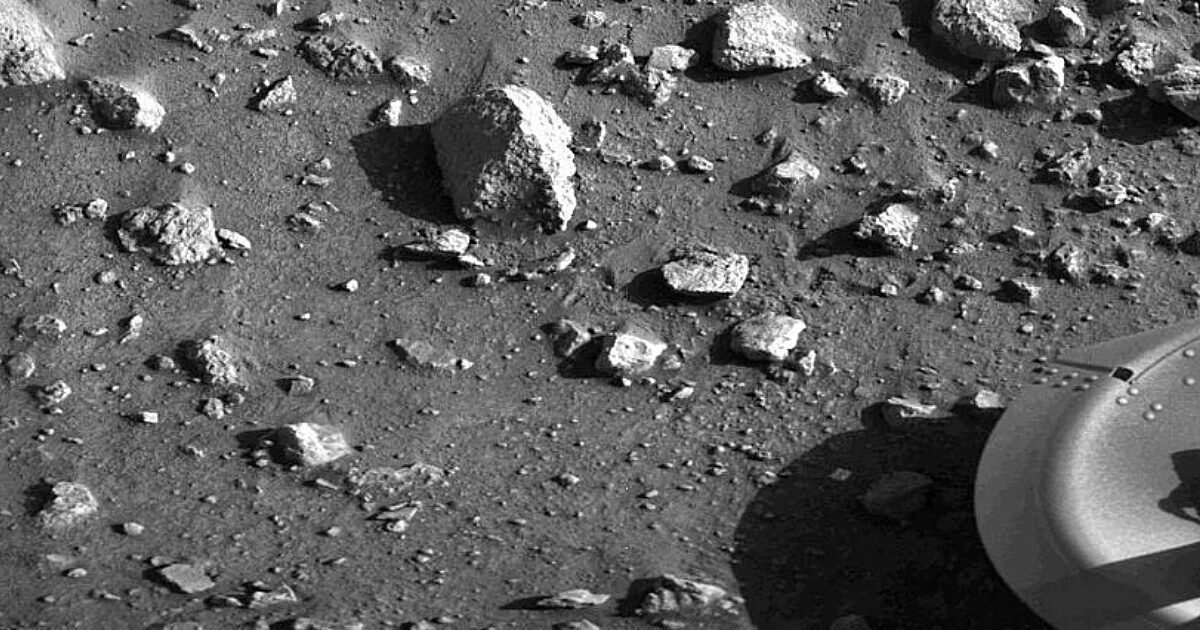
NASA's exploration of Mars has provided striking visual documentation of the planet, from the first surface images captured by the Viking 1 lander in 1976 to the recent flyby portraits by the Psyche spacecraft in 2026.
On July 20, 1976, Viking 1 made history by capturing the first-ever photograph from the Martian surface, shortly after its successful landing. The mission, initially planned for 90 days, extended to an impressive 2,307 Earth days, significantly enhancing our understanding of Mars through high-resolution mapping and iconic images of Martian features such as Valles Marineris.
In a more recent mission, NASA's Psyche spacecraft performed a gravity-assist flyby of Mars on May 15, 2026. During its closest approach, at a distance of 2,864 miles (4,609 km) from the surface, Psyche's multispectral imager captured detailed color images, including views of the Huygens crater and the surrounding southern highlands. These images offer a contemporary perspective on Mars, complementing the historical data from Viking 1.
The flyby not only provided valuable images but also adjusted Psyche's trajectory for its journey to the metal-rich asteroid Psyche, which it is expected to reach in August 2029.