Japanese Team Explores Earth's Magnetic Field for Dark Matter Detection
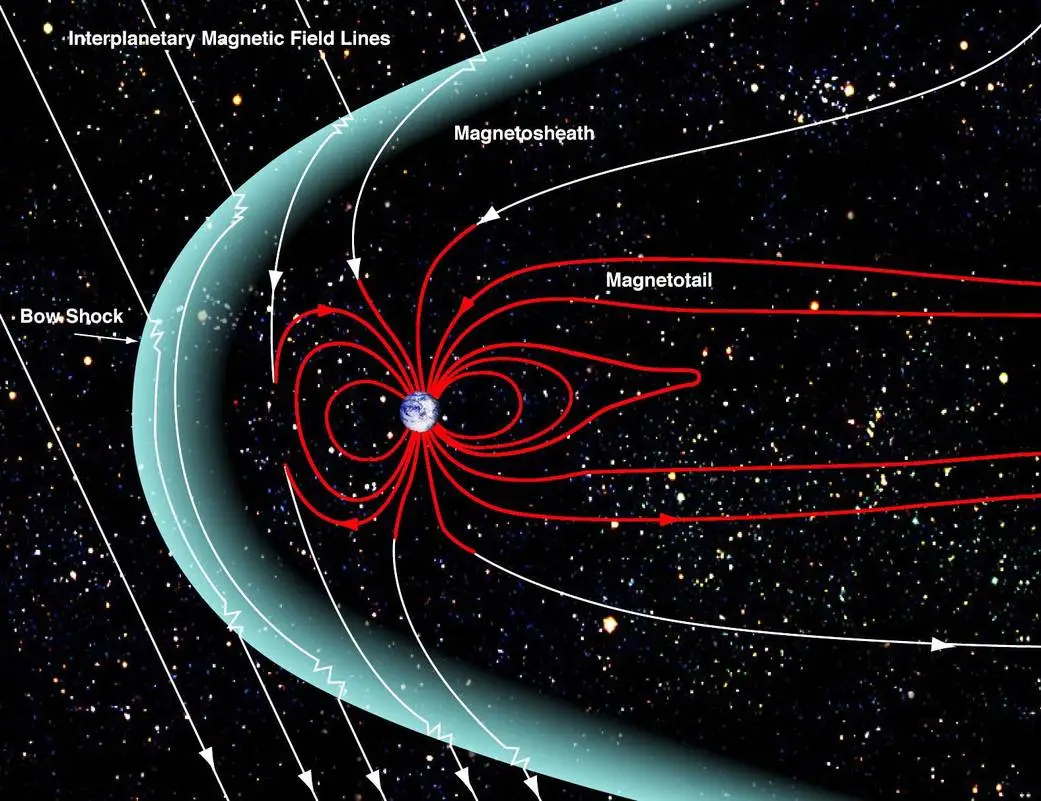
A Japanese research team is pioneering a novel method to detect dark matter by utilizing Earth's natural electromagnetic cavity, the space between the ground and the ionosphere, as a resonator. This approach leverages the Earth's magnetic field as a vast, natural magnet, potentially bypassing the need for massive, costly laboratory devices traditionally used in dark matter detection.
The team's concept is grounded in the idea that if dark matter consists of wave-like particles, such as axions or dark photons, it could convert into low-frequency radio waves within this cavity. The Earth's electromagnetic cavity resonates at approximately eight cycles per second, a frequency known as the Schumann resonance.
According to a study by Beadle, Caputo, and Ellis, the mass range for the dark matter particles targeted by this method is between 10⁻⁹ and 10⁻⁸ electronvolts. They propose that small dipole antennas could potentially detect signals from these particles, making this approach significantly more accessible than traditional methods involving large underground instruments.
However, the practical application of this method faces challenges due to the ionosphere's variability. A review by MDPI highlights that while the Earth-ionosphere system can be modeled as a cavity with a quality factor of 3 to 8, accurate modeling is limited to frequencies below approximately 5 Hz due to ionospheric inhomogeneity and conductivity variability.
Despite these challenges, the potential to use Earth's natural properties as a detector represents a significant shift in the approach to dark matter research, offering a cost-effective and innovative alternative to traditional detection methods.