Hubble Tracks Crab Nebula's Expansion Nearly 1,000 Years After Supernova
By Rachel Kim
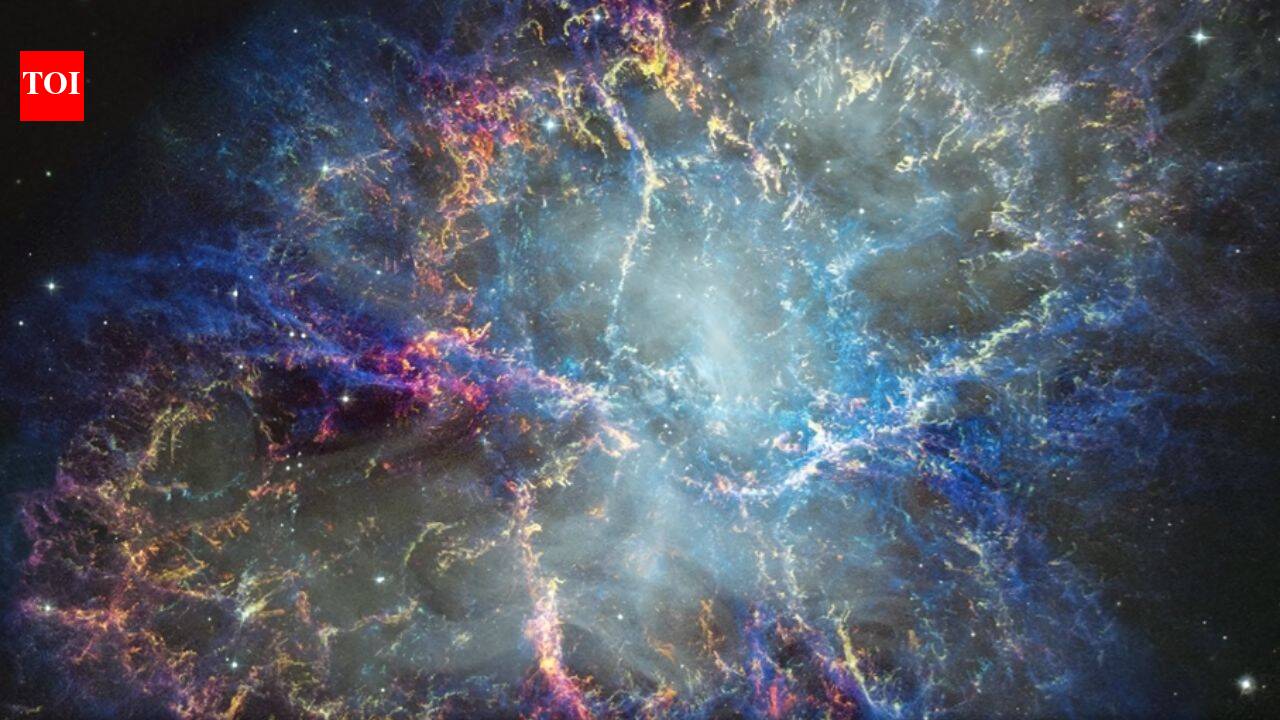
NASA's Hubble Space Telescope has provided new insights into the Crab Nebula, revealing its continued expansion nearly 1,000 years after the supernova that created it was first observed in 1054 CE. The nebula, located approximately 6,500 light-years from Earth in the constellation Taurus, remains a focal point for studying supernova remnants.
On March 23, 2026, NASA and the European Space Agency released images comparing the nebula's structure from 1999 to 2024, showcasing the motion of its filamentary structures. These filaments have been expanding outward at speeds of about 5.5 million kilometers per hour (approximately 3.4 million miles per hour), according to the agencies.
The images reveal that filaments near the nebula's outer edges have shown more significant movement, attributed to their lateral motion relative to Earth. In contrast, central filaments exhibit smaller apparent motion. This data, processed from Hubble's Wide Field Planetary Camera 2 and Wide Field Camera 3, also indicates variations in filament color, which correspond to changes in temperature, density, and chemical composition.
A study published in The Astrophysical Journal in January 2026 by Blair et al. detailed that the outer filaments exhibit proper motions of approximately 0.3 arcseconds per year. Spectroscopic measurements indicate a full expansion velocity range of ±2,000 kilometers per second, with the brighter filaments within ±1,250 kilometers per second.