Greenland's Petermann Glacier Loses Significant Ice Chunk
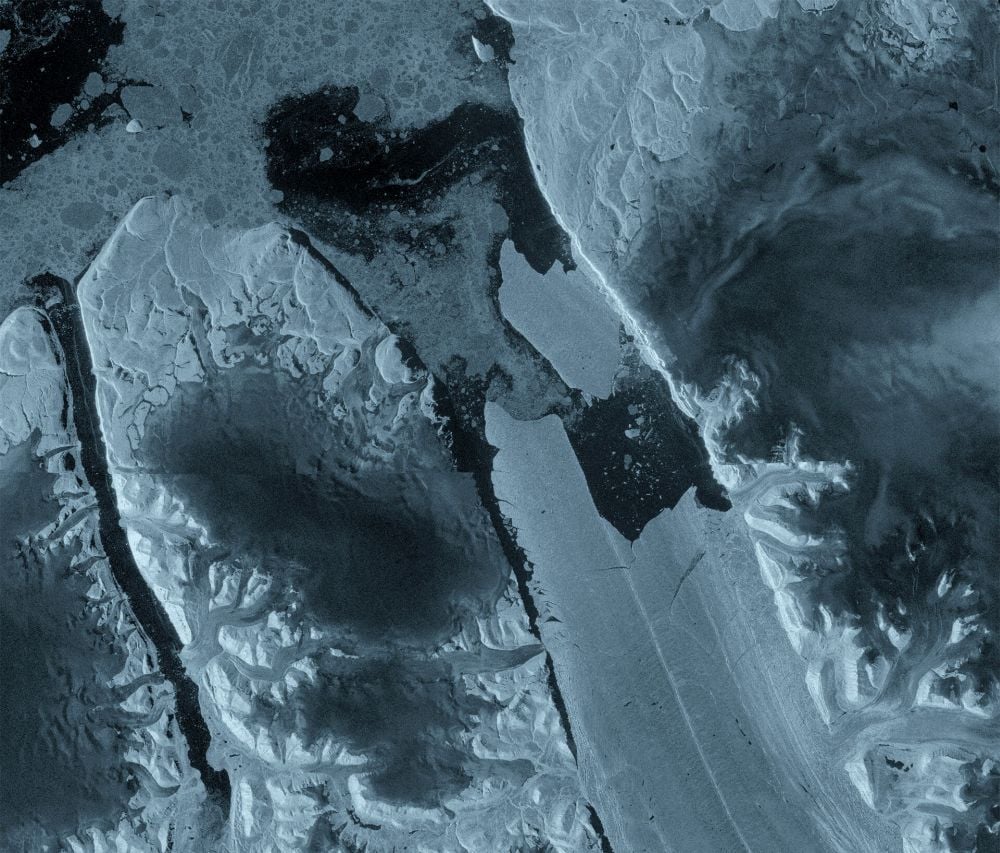
On August 4, 2026, a 76 square kilometer section of the Petermann Glacier in northwest Greenland broke away, marking the largest ice loss from the glacier since 2012. This event is also the most significant Arctic calving since 2020, according to data from the European Space Agency's Sentinel satellites.
The calving was captured using both optical and radar interferometry by the Copernicus Sentinel-1 mission, which observed fractures and deformations beginning in April 2026. The detached iceberg is estimated to be up to 150 meters thick, comparable in size to Manhattan Island.
Researchers from multiple institutions, including the University of Ottawa and Environment and Climate Change Canada, are collaborating to monitor the situation. The loss of this ice tongue, which acts as a restraint on glacier flow, could accelerate ice discharge beyond the grounding line, potentially impacting Arctic navigation and infrastructure.
Future calving events are anticipated, with two more large ice islands, approximately 94 and 84 square kilometers in size, possibly detaching soon. This would reduce the ice tongue by about 22 percent, further altering the glacier's dynamics.