Greenland Sharks' Longevity Offers Insights Into Human Eye Health
By Rachel Kim
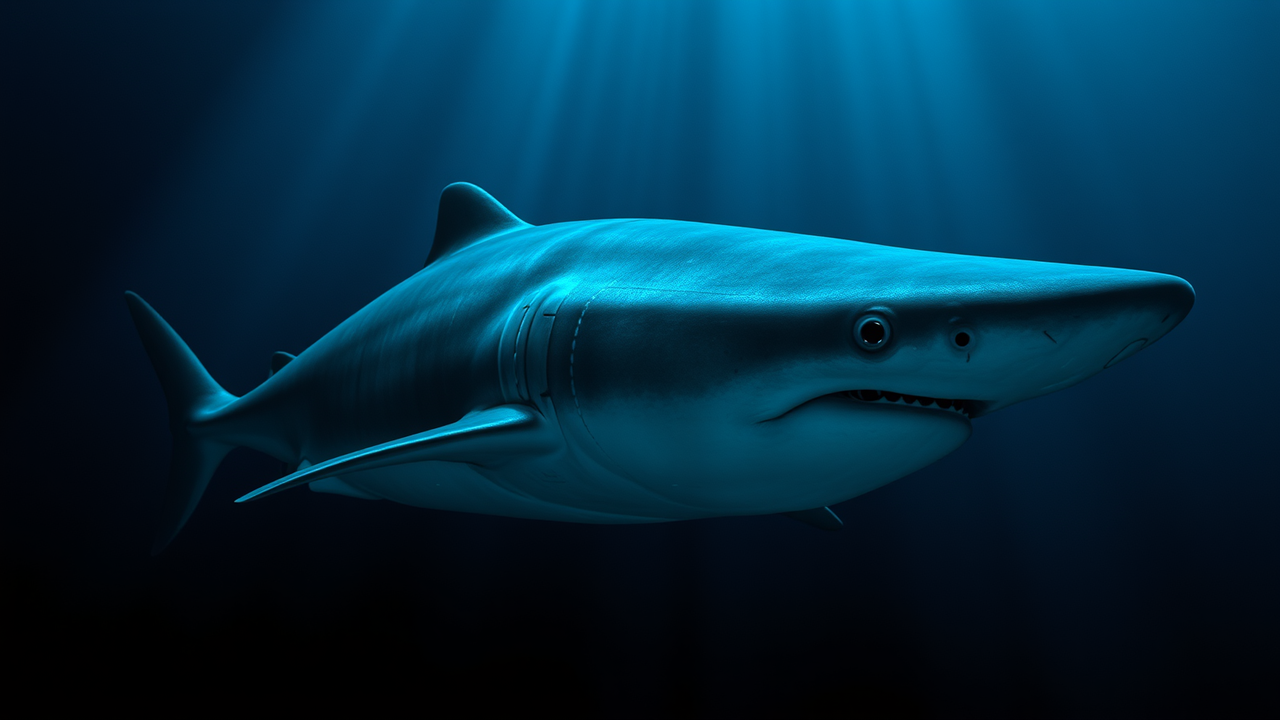
Greenland sharks, which can live for centuries, have been found to maintain functional vision despite residing in the dark, parasite-infested waters of the Arctic, according to recent studies. These findings may provide valuable insights for human ophthalmological research.
A study published in Nature Communications reveals that Greenland sharks possess a robust rod-based visual system that remains intact even in sharks over a century old. This includes specialized adaptations like densely packed rods and a shift in rod pigment sensitivity to short wavelengths, which help them survive in deep-sea environments.
Despite previous assumptions of blindness due to corneal parasitization, these sharks exhibit no retinal degeneration, and their retinas show strong expression of DNA-repair genes such as ercc1 and ercc4/XPF. These genetic mechanisms are believed to contribute to the sharks' long-term retinal maintenance.
While direct applications to human eye health are not yet established, researchers suggest that the DNA repair capabilities observed in Greenland sharks could inspire new strategies to delay or prevent age-related retinal degeneration in humans.