Google's AI Satellite Delivers First Orbital Haiku
By Priya Anand
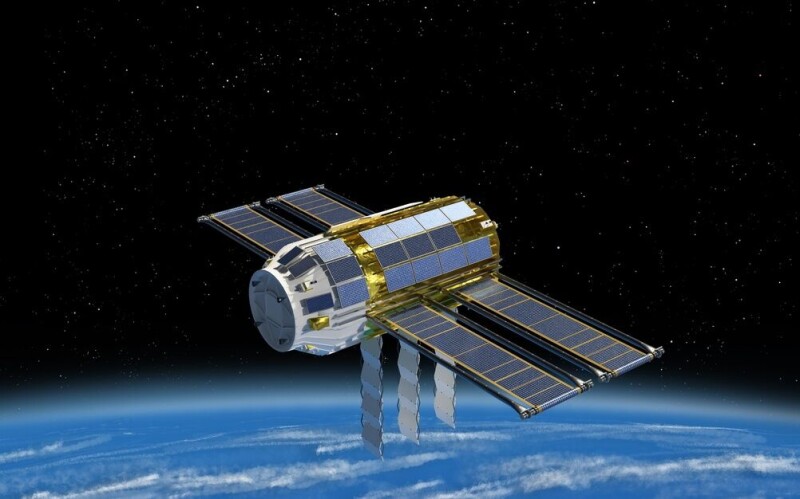
Google's Project Suncatcher satellite has successfully completed its first AI task in orbit, generating a haiku as part of an experimental test of space-based machine learning capabilities. The satellite, launched on October 1, 2026, aboard SpaceX’s Transporter-18, marks an early milestone in Google's efforts to evaluate scalable machine learning infrastructure in space.
The haiku, created by the onboard Gemma 4 open-model AI, reads: 'Blue marble below, Data streams in silent grace, Starlight feeds my core.' This represents the first inference performed by Google-class TPU hardware in orbit, executed over Svalbard, Norway.
Despite the minimal cost of generating the haiku via Google Cloud API—approximately $0.000012—the actual expense of executing it in orbit is significantly higher when considering launch and hardware costs. The satellite's mass, estimated at 500 kg, and the current launch cost of around $7,000 per kilogram highlight the economic challenges of orbital AI compute.
Google's testing has also examined the satellite's resilience to space conditions. Laboratory tests exposed the hardware to a 67 MeV proton beam, revealing irregularities in high-bandwidth memory after a total ionizing dose of 2 krad(Si), exceeding Google's minimum requirement for survival. Despite these challenges, the silent data corruption rate suggests a low failure probability for typical workloads.
Looking ahead, Google plans to deploy two interconnected satellites in 2027 to explore cluster architectures and inter-satellite optical links, further advancing the potential of orbital machine learning.