Glacial Collapse Triggers Deadly Flash Flood in Nepal and Tibet
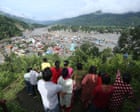
A catastrophic flash flood has devastated border communities between Nepal and Tibet, triggered by a glacier collapse in the Himalayas on August 26, 2026. The disaster has resulted in at least 360 deaths and 1,400 people missing, according to various reports.
The U.S. Geological Survey identified the collapse along Lāngtāng Lirung in Langtang National Park, which registered a magnitude-5.2 seismic event at approximately 8:37 am local time. The collapse sent a massive ice-rock avalanche into the Lhende Khola, forming a temporary dam and causing a flash flood along the Trishuli/Bhotekoshi River.
Satellite imagery confirmed that a significant section of the glacier fell vertically about 1,200 meters from an elevation of 5,200 meters. This collapse is believed to have been exacerbated by unusual heat, which may have melted ice and weakened the bonds holding the glacier in place.
Casualty estimates vary, with the Government of Nepal reporting 175 bodies recovered and 624 people from 32 countries missing. Discrepancies in figures reflect ongoing search efforts and reporting delays.
The Himalayan region is warming at twice the global average, increasing the frequency and severity of cryo-hydrological hazards. Similar events have been recorded in recent years, including a glacial lake outburst in July 2025 that caused fatalities along the Lende River.
This incident underscores the urgent need for improved monitoring and early warning systems to mitigate the growing climate-driven risks in high-mountain regions.