Flare Ribbons Unveil Hidden Solar Explosions
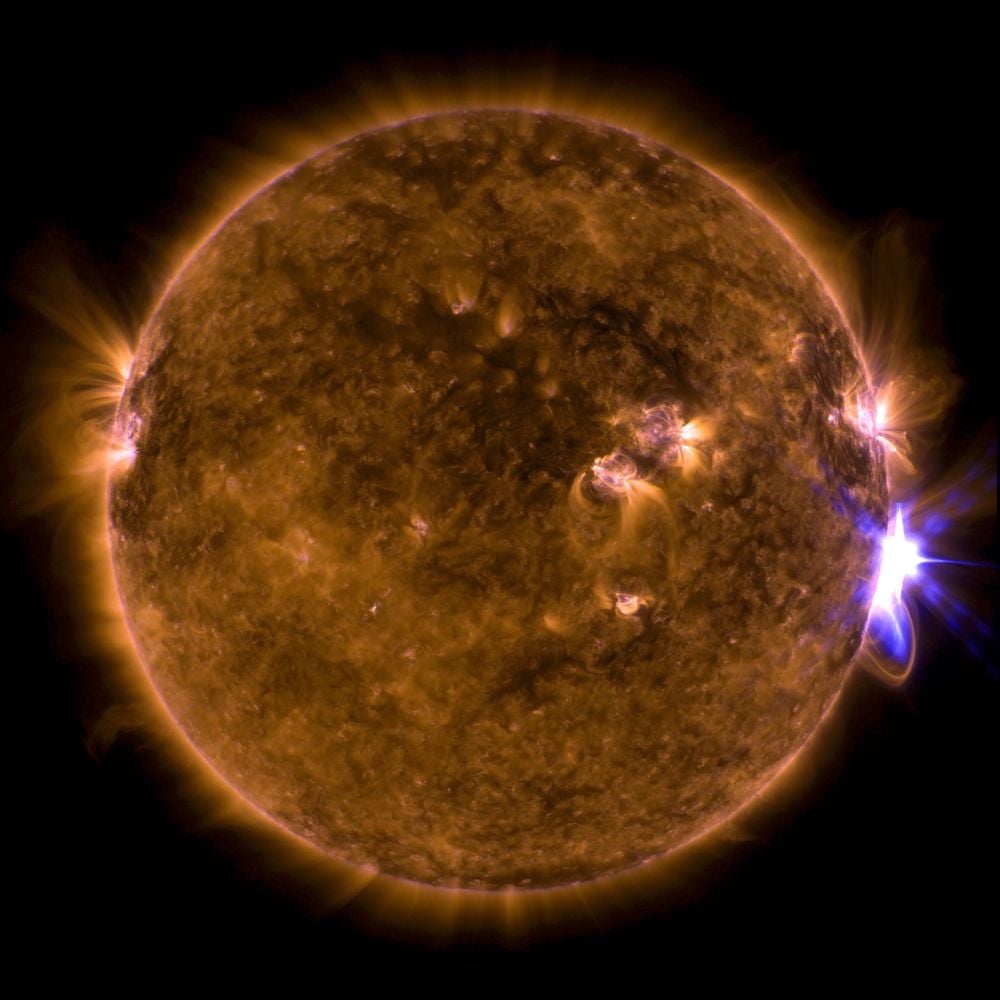
Researchers have discovered hidden micro-explosions within solar flare ribbons, offering new insights into the Sun's magnetic reconnection processes. Using the Daniel K. Inouye Solar Telescope (DKIST), scientists observed tiny bright 'blobs' within flare ribbons, each about 300–500 kilometers across. These structures, significantly smaller than Earth, suggest more intricate reconnection dynamics than previously understood.
Flare ribbons, visible in chromospheric UV, EUV, and Hα emissions, mark the footpoints of newly reconnected coronal field lines. They serve as critical indicators of the coronal reconnection process. The discovery of these 'ribbon blobs' provides a new perspective on solar flare behavior, revealing substructures within the reconnection current sheets.
Statistical analyses of solar flares have further differentiated between confined and eruptive flares. Eruptive flares, which are associated with coronal mass ejections (CMEs), exhibit larger ribbon separations and higher separation velocities compared to confined flares. These eruptive events also demonstrate maximum reconnection electric fields reaching up to 70 V/cm, in contrast to the lower fields observed in confined flares.
Recent studies have also highlighted the dynamic nature of magnetic reconnection. Oscillations in reconnection flux rates, derived from flare ribbons, show that bursts lasting 1–4 minutes account for a significant portion of the total reconnection flux in each event. These findings underscore the bursty and dynamic nature of solar flare reconnection processes.