Exoskeletons Show Real-World Benefits Across Sectors
By Adrian Cole
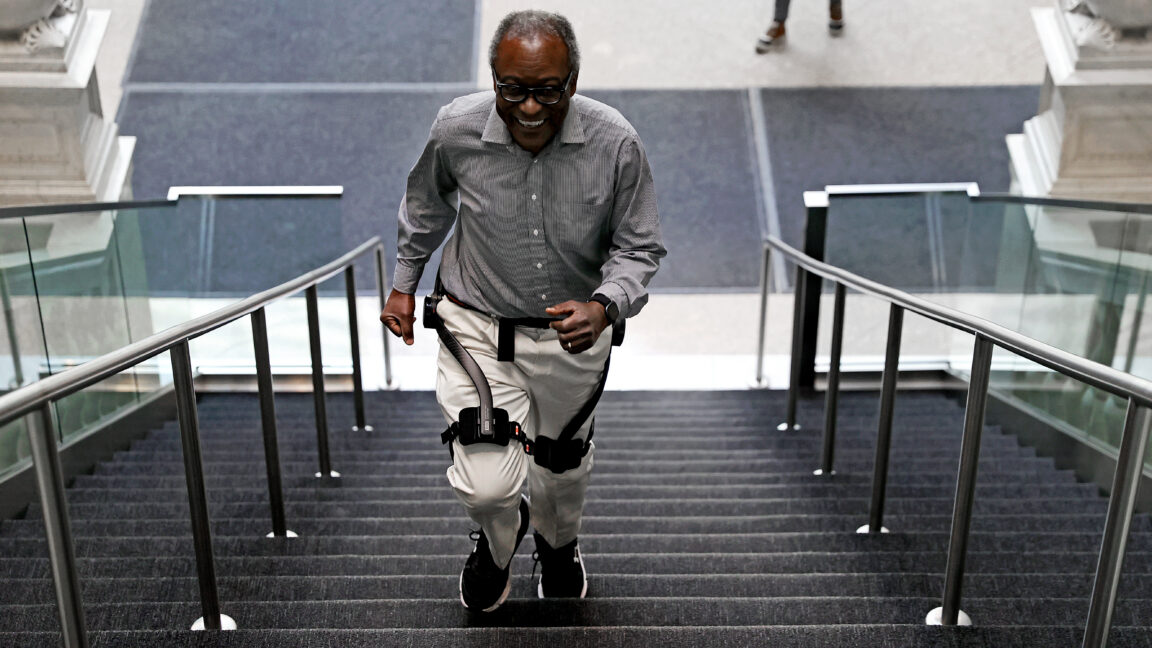
Exoskeletons are increasingly demonstrating tangible benefits in real-world applications, according to recent studies. These devices are showing promise in healthcare, logistics, and elder care by enhancing physical performance and user satisfaction.
A clinical trial at University Hospital Magdeburg tested passive back-support exoskeletons with healthcare professionals. Over two months, participants reported improved posture and back stability, with an average usability rating of 2.7 on the German school grading scale. The trial suggests that preventing as few as 2.7 sick days per nurse annually could make the investment cost-neutral.
In elder care, a study published in Nature Communications evaluated a tendon-driven soft hip exosuit with older adults. The exosuit improved sit-to-stand repetitions by 1.8 per minute and reduced walking metabolic costs by 13.6%, while maintaining natural movement and a sense of agency.
In logistics, an active back-support exoskeleton tested in a warehouse setting showed a 7.6% reduction in metabolic equivalent tasks (METs), although individual responses varied. A separate field study involving 146 warehouse workers found that 80% expressed willingness to continue using the exosuits, with perceived effectiveness and compatibility driving intent-to-use.