Climate Crisis Intensifies Wildfire Challenges for European Firefighters
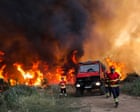
Firefighters across Europe are grappling with increasingly severe wildfires, exacerbated by climate change, that are overwhelming resources and forcing difficult decisions about which blazes to prioritize. In Spain and France, the situation has reached critical levels as record-breaking heat and dry conditions have fueled fires that have already consumed tens of thousands of hectares.
In Spain, as of July 1, 2026, wildfires had burned approximately 50,000 hectares, more than double the typical area for this time of year. France has seen similar devastation, with about 28,000 hectares burned. The sheer number of fires—250 to 300 simultaneously in France—has compelled authorities to triage resources, deciding which fires to combat based on potential threats to human life and infrastructure.
According to scientists, the extreme heat experienced in June 2026 was made ten times more likely for daytime highs and 100 times more likely for nighttime lows due to climate change. This has created a dangerous cycle where wet winters and springs produce abundant vegetation that becomes highly flammable under rapid summer heat.
In response, Spain has launched its largest state deployment for a wildfire campaign, including a fleet of 15 amphibious aircraft and additional helicopters. The national wildfire prevention campaign was also brought forward to June 1, 2026, as a proactive measure. Meanwhile, the Spanish government has enhanced its civil protection planning to improve coordinated responses.
At the European level, the EU Council adopted a strategy on June 29, 2026, to promote preventive measures like prescribed burning and strengthened cross-border civil protection mechanisms. Despite these efforts, the scale of the challenge remains daunting, as evidenced by Spain's 2025 fire season, which saw more than 393,000 hectares burned.