Catastrophic Landslides in Northern Canada Linked to Permafrost Thaw
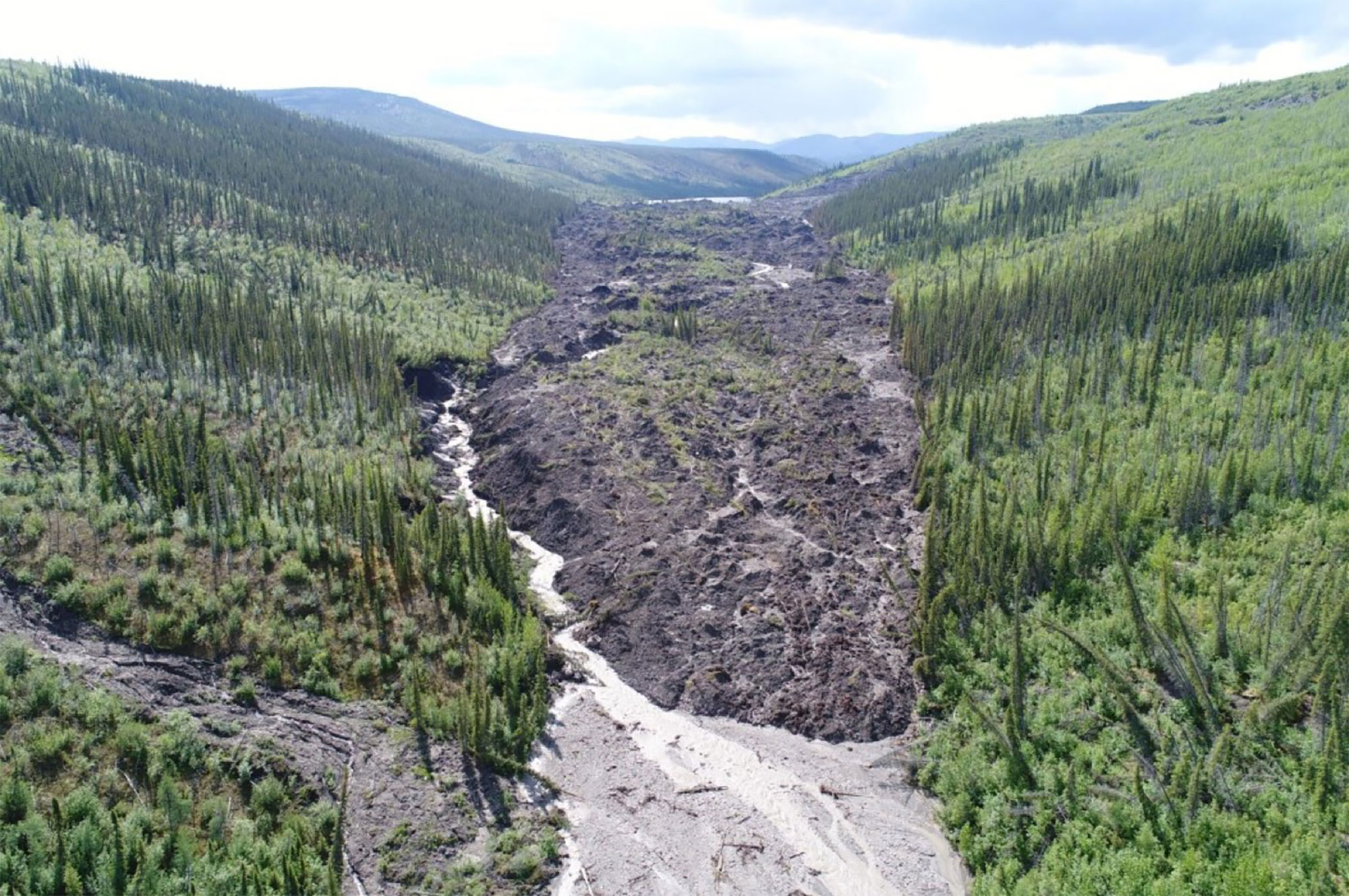
In Canada's Northwest Territories, two significant landslides have occurred due to the thawing of permafrost, a phenomenon known as permafrost detachment slides (PDS). These events, reported by Grist and detailed in a study published in Geophysical Research Letters, displaced approximately 30 million cubic yards of frozen ground.
The landslides, occurring in 2017 along the Johnson River and in 2018 on the Redstone River, involved the rapid downslope movement of permafrost layers. Each slide extended for approximately three-quarters of a mile and two miles, respectively, with embedded frozen blocks reaching up to 650 feet in length.
The degradation of permafrost in these areas was linked to a 1995 wildfire that removed vegetation, which had previously shaded and insulated the permafrost. Over two decades, the exposed ground warmed, weakening the permafrost from the base up, leading to its eventual collapse.
According to Canada's federal climate assessments, permafrost in northern Canada has been warming since the 1980s, with near-surface temperature increases of about 0.1°C per decade in the Mackenzie Valley. This warming has resulted in land subsidence of approximately 4 cm per decade and permafrost loss of about 8 cm per decade at over 70% of monitored sites.