Caltech Research Reveals Stardust as Seeds for Solar System's Earliest Solids
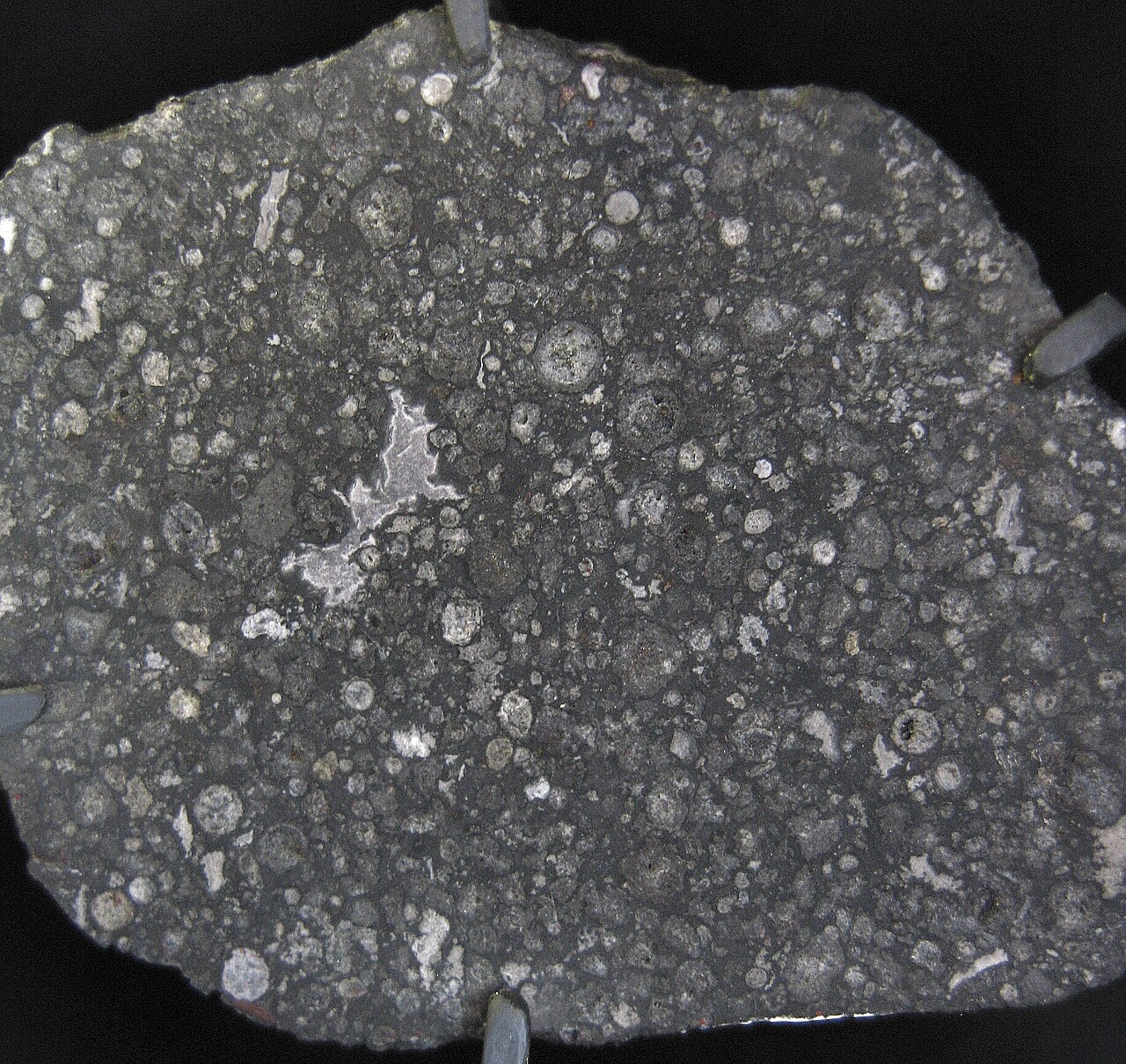
Researchers from Caltech have discovered that presolar stardust grains embedded within the Allende meteorite likely served as nucleation seeds for the earliest solid materials in the Solar System. This finding, published in Science Advances, addresses a longstanding question in cosmochemistry about how the first solids condensed from the solar nebula.
The Allende meteorite, which fell in Mexico in February 1969, is one of the most primitive and least altered fragments of early Solar System material. It contains calcium-aluminium-rich inclusions (CAIs), which are the oldest known solids in the Solar System, dating back approximately 4.568 billion years.
Caltech's analysis revealed that these CAIs contain presolar grains, remnants of stars that existed before the Sun. These grains provided the necessary surfaces for the first solid condensates to form as the solar nebula cooled. This discovery challenges the traditional view of a hot, homogeneous solar nebula by suggesting that stardust grains played a crucial role in the early stages of planetary formation.
The research utilized step-leaching techniques to isolate fine-grained CAIs, revealing extreme nucleosynthetic strontium-84 excesses. These isotopic signatures confirm the presence of presolar carriers, supporting the hypothesis that they acted as nucleation sites for the earliest condensates.
This breakthrough not only enhances our understanding of the Solar System's formation but also provides insights into the processes that govern planetary formation in other star systems.