Asteroid Bennu Samples Reveal Unexpected Isotopic Variations
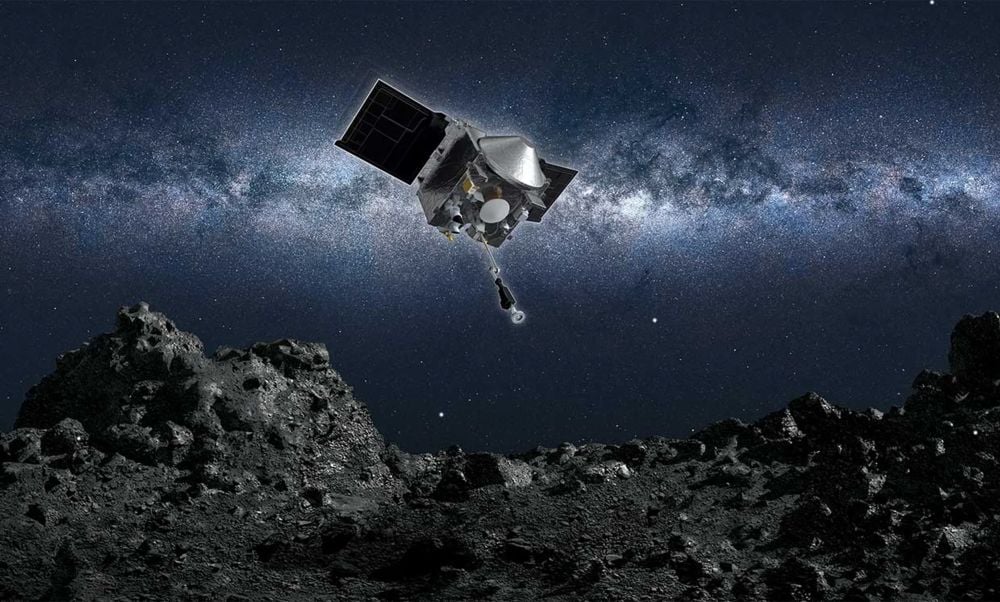
Researchers analyzing samples from asteroid Bennu have identified significant isotopic differences in the amino acid β-alanine when compared to the Murchison meteorite. The findings, published in Communications Earth & Environment, reveal that these differences suggest diverse formation environments within the early Solar System's protoplanetary disk.
The study measured intramolecular δ¹³C and δ¹⁵N values, focusing on specific carbon and nitrogen positions within the β-alanine molecule. For Bennu's β-alanine, the δ¹³C at the carboxyl (COOH) position was recorded at 363 ± 29 ‰, with a position-averaged δ¹³C of -163 ± 13 ‰. The δ¹⁵N value was 170 ± 4 ‰. In contrast, the Murchison meteorite showed a δ¹³C COOH of 111 ± 22 ‰, an average δ¹³C of -44 ± 10 ‰, and a δ¹⁵N of 63 ± 4 ‰.
The stark isotopic disparities between the two samples indicate that while they may share synthetic precursors, they likely formed under different conditions or locations within the protoplanetary disk. This supports the hypothesis of spatial heterogeneity in prebiotic organic synthesis.
Further context from research published in PNAS highlights that Bennu's amino acids exhibit highly elevated δ¹⁵N values, suggesting formation in colder, outer regions of the solar system. Additionally, the nitrogen isotope difference between D- and L-glutamic acid in Bennu samples underscores chiral isotopic heterogeneity, challenging assumptions about uniform isotopic behavior.